DIGITAL MUSIC THERAPY TABLE
PROVIDING POSITIVE EVIDENCE-BASED OUTCOMES
DEMENTIA & COGNITIVE ABILITY
Music and emotion are intricately connected. Our response to music begins at a very young age, before our words and language develop. This continues towards the end of our lives, even when verbal abilities decline.
Music therapy is widely used in care home to support residents with various conditions, including dementia, autism, learning disabilities and more. Regardless of age or cognitive ability, music therapy has a unique ability to tap into emotions and memories, providing comforting and therapeutic experience.
Music therapy has shown promising results in improving mood, alertness and engagement especially in dementia patients.
- Games, Cards & Puzzles
- Sensory & Dementia Apps
- Colouring, Drawing & Painting
- Board Games
- Virtual Reality Games
- Brain Training & Memory Apps
- Dementia Solutions
- Quizzes & Trivia
- Music & Sing Along
- Watching Films & TV Shows
- Amazon Prime & Netflix
- ZOOM Video Calls
Music has the power to evoke many different memories and emotions, it can even be used as a communication tool to engage with someone who has been diagnosed with dementia. Studies have shown that playing certain types of music can reduce stress and anxiety and can make you feel more positive and upbeat. Music also can make us feel nostalgic, it can bring you back to a memory, a holiday, a happy time.
· Music helps people with dementia express feelings and ideas
· Music can encourage a person to connect with others around them
· It can promote social interaction
· Reduce social isolation and enhance new relationships
· Music can facilitate physical exercise by dance and movement.
Research shows that music activities (both music listening and music making) can influence older adults’ perceptions about the quality of their lives. Some research has examined the effects of music listening on biological markers of health and subjective perceptions of wellbeing. Other studies on the psychological and social benefits associated with music making activities have demonstrated that participants often place considerable value on these “non-musical” benefits of music activity (Coffman, D. D. 2002. Music and quality of life in older adults. Psychomusicology, 18, 76-88).
Here at the Digital Rainbow, we are committed to providing technology into care that will enhance the wellbeing of your residents. The Digital Rainbow has many musical apps that can assist your care staff in integrating Music therapy sessions into their care plan.
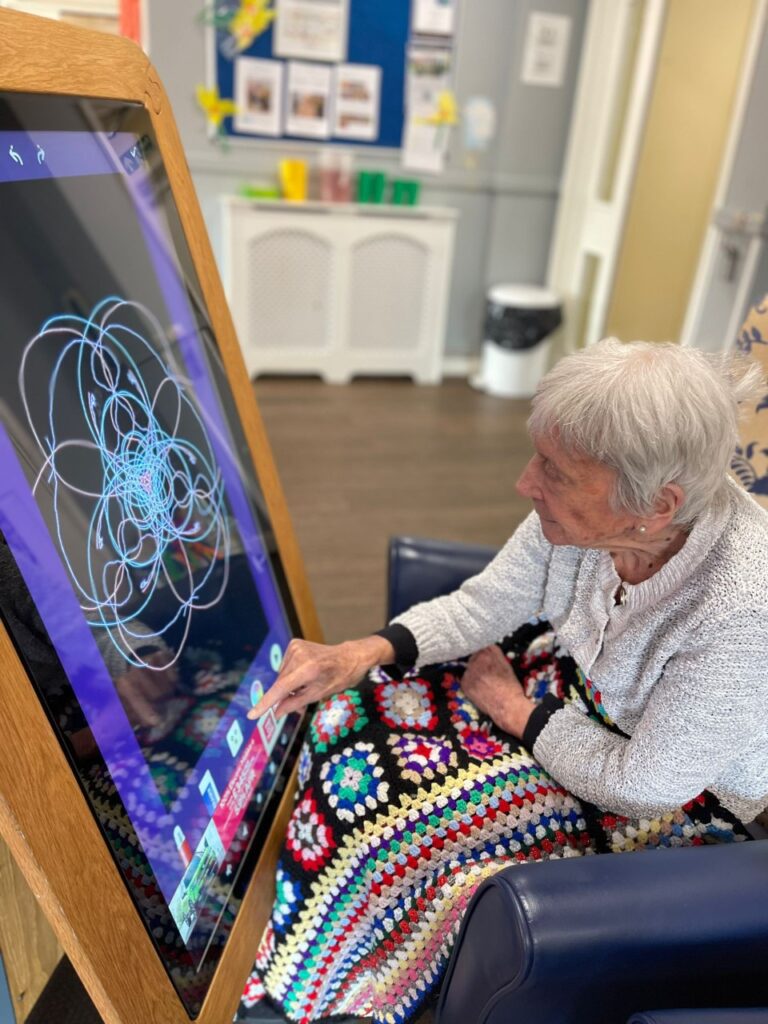
Customer feedback from STOKELEIGH RESIDENTIAL CARE HOME
“Just to show the impact The Rainbow Table is having on our residents, this is Eileen you may of seen her before however she is usually a quiet lady and has never let us hear this wonderful voice before, Vera Lynn on the karaoke certainly brought out a side to Eileen we hadn’t heard before”
WATCH VIDEO HERE: https://fb.watch/f8godGQyz1/
Customer feedback from ARIA COURT CARE HOME
“Everybody was entertained today by the rainbow table. We had dominoes, aquariums, wordsearch, music and singalongs, and drumming. Our resident drummer who was in a band for many years loves nothing more than to have a beat on a realistic set of drums. This is him in action!! “
WATCH VIDEO HERE: https://fb.watch/f8gq4sr-zB/
READY TO GET STARTED?
We’d love to hear from you, please send us a message and we’ll get back in touch as soon as possible!
Address:
36a Church St, Willingham, Cambridge CB24 5HT
Email:
kat@thedigitalrainbow.co.uk
Phone:
07949 391700